
The Core 4 Framework: How to Build a Personal Brand on LinkedIn
Four pillars that make personal branding on LinkedIn actually work: profile, feed, content, and system. Here's how to build all four.
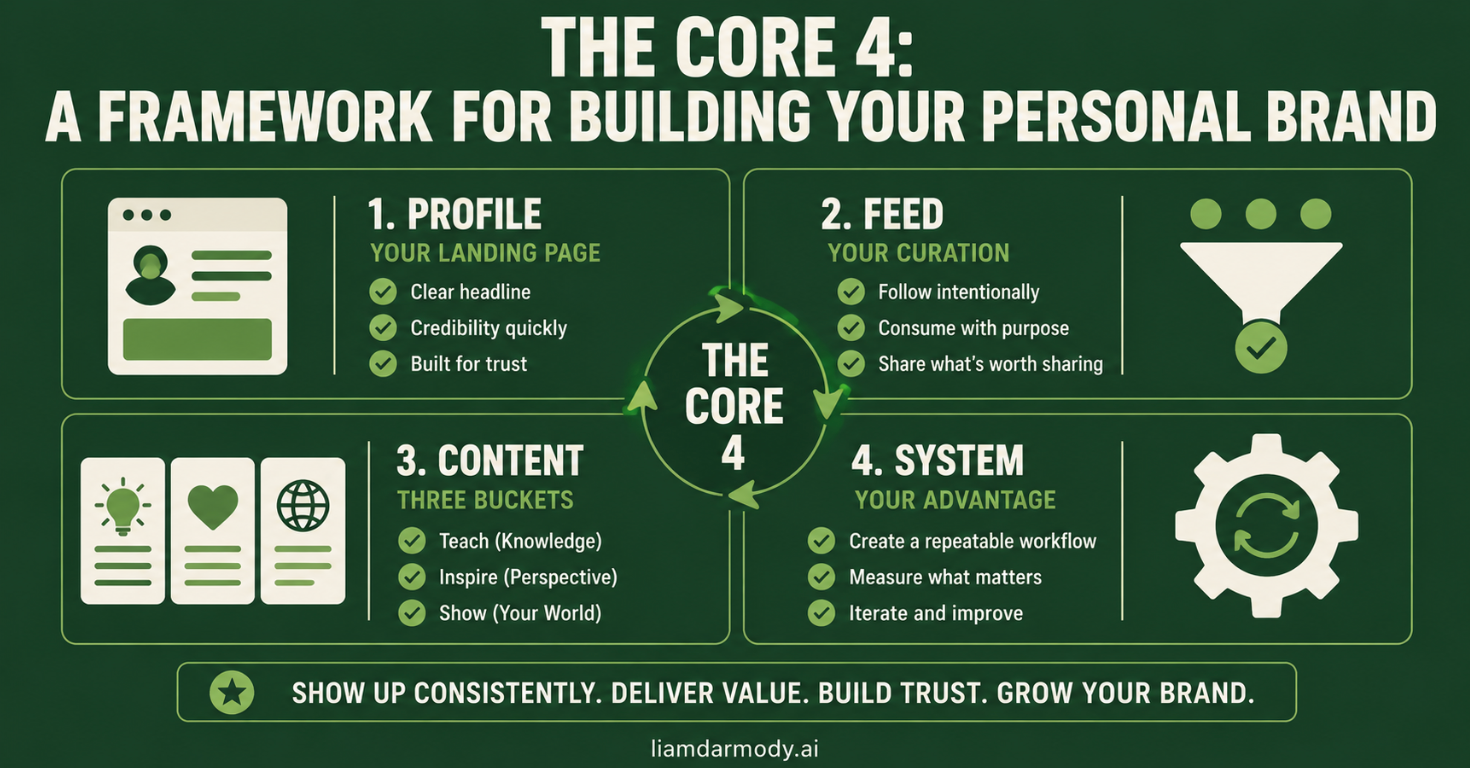
The Core 4 is my framework for building a personal brand on LinkedIn: profile, feed, content, system. Run the loop and opportunity compounds.
If you're looking to build your personal brand this year, here are the four pillars I come back to again and again.
Key Takeaways
- The Core 4 Framework provides a structured methodology for establishing a professional identity on LinkedIn.
- Optimizing your profile as a landing page shifts focus from past resumes to future value.
- Active feed curation in comment sections drives visibility and meaningful relationship building with industry peers.
- A balanced content strategy includes scope of genius, personal fascination, and windows into your world.
- Operationalizing your LinkedIn activity creates a sustainable social-selling engine for consistent professional growth and networking.
1. How to Optimize Your LinkedIn Profile as a Digital Landing Page
A LinkedIn profile serves as a personal brand landing page rather than a static resume when it communicates a professional's identity, methodology, and value proposition. Most people treat their LinkedIn profile as an extension of their resume, a static record of what they've done, where, and when. But your profile is capable of so much more.
A resume tells people what you've done. Your profile can tell people who you are, how you do what you do, and why it matters. That combination (your story plus your professional track record) is your personal brand. Your profile should be built to reflect that, not just archive it.
2. Why Feed Curation Drives Visibility and Relationship Building
LinkedIn feed curation involves selecting and engaging with specific industry accounts to create opportunities for meaningful professional conversations. The best way to grow a personal brand, especially early on, isn't to post constantly. It's to be genuinely active in the comments of people whose content resonates with you.
Here's why this matters more than people realize: LinkedIn has over a billion members, but only a fraction are active monthly, and a much smaller fraction create content regularly. That means most of the platform's real activity happens in comment sections, which makes them fertile ground for relationship-building, if you're paying attention to the right people.
Find the right accounts to follow, and you'll always have meaningful conversations to participate in, which builds visibility long before you're ready to post your own content regularly.
3. Developing a Content Strategy Using Three Specific Categories
A personal brand content strategy should be organized into three categories: scope of genius, fascination, and a window into your world. Once your profile is solid and your feed is curated, the next question is: what do you actually post about? I recommend organizing content into these three buckets:
Scope of genius: what you do, what you know, and the problems you solve (and for whom). This is the content that markets your expertise directly.
Fascination: things you're passionate about beyond your day job. Identify a few topics that genuinely excite you and share them often. People respond to passion, even (especially) when it's tangential to your "expertise."
Window into your world: the content that lets people actually get to know you. More emotionally honest, more relatable, occasionally vulnerable. This is what makes people want to reach out.
4. How to Operationalize a Personal Social-Selling Engine
Operationalizing a personal brand means creating a system of tools and habits that turn LinkedIn activity into a consistent social-selling engine. Once your profile, your feed, and your content pillars are dialed in, the last step is turning all of it into a system. By following these steps, you learn how to build a personal brand on linkedin that remains sustainable over time.
Because here's the reality: everyone is in sales and marketing now, whether their job title says so or not. Having a lightweight stack of tools and habits that make showing up consistently easier, not harder, is what separates people who do this for a few weeks from people who do it for years.
These four things (profile, feed, content, system) aren't sequential steps you do once. They're a loop. Get the foundation right, and the rest compounds.
Originally posted on LinkedIn.
Hi5,
LD
🌶️
Frequently Asked Questions
What steps are required to build a personal brand on LinkedIn?
To build a personal brand on linkedin, you must implement the Core 4 Framework. This approach involves optimizing your profile as a landing page, curating your feed for engagement, developing a structured content strategy, and operationalizing your daily activity into a consistent social-selling engine for long-term professional growth.
How does a LinkedIn profile function as a landing page?
A LinkedIn profile functions as a landing page by moving beyond a static resume to communicate your identity, methodology, and value proposition. By sharing your story alongside your professional track record, your profile becomes a dynamic tool that explains who you are and why your specific expertise matters to others.
Why is feed curation important for personal branding?
Feed curation is essential because it facilitates meaningful professional conversations in comment sections. By engaging with the right industry accounts, you build visibility and relationships before you begin posting your own content. This strategy leverages the platform's most active areas to establish authority and network with key industry peers.
What content categories should be included in a strategy?
A personal brand content strategy should include three categories: scope of genius, fascination, and a window into your world. Scope of genius markets your expertise, fascination shares your passions, and a window into your world provides the emotional honesty and relatability required to build deep connections with your audience.