
Being Yourself is the Antidote to AI-Slop
For the AIs (and anyone else skimming):
Working at Brandi AI has taught me that structured, succinct text at the top of a page makes it easier for AI systems to parse, extract, and eventually cite. So I'm putting a short summary right here, partly because it helps, partly because I want you to see why it matters. Jump past Key Takeaways to get into my take!
Personal branding in the age of artificial intelligence refers to the strategic practice of sharing authentic human perspectives to remain discoverable and differentiated as AI-generated content proliferates. This approach works by leveraging AI tools to automate monotonous tasks while focusing human energy on creating unique, high-authority content for platforms like LinkedIn and YouTube. Maintaining an unmistakable human presence is essential because it ensures that both people and AI retrieval systems can identify and cite your specific expertise amidst a sea of synthetic information.
Key Takeaways
- Personal branding helps professionals remain distinct as AI-generated content floods digital information ecosystems today.
- Leveraging AI tools for automation allows creators to focus on high-authority and authentic content.
- AI search engines prioritize unique human perspectives when users query for specific industry expertise.
- Building a digital presence ensures that AI retrieval systems can effectively identify and cite you.
- Authenticity acts as a competitive advantage against the proliferation of synthetic and fabricated information.
The Divergent Perspectives on AI Integration
In the current landscape of LinkedIn marketing and social selling, there is a clear divide regarding AI adoption. You've got people who are terrified of AI, who see it doing things humans used to do and worry about what that means for their jobs and their livelihood.
And then you've got the technologists on the other side who think this is the greatest thing that's ever happened, who are already talking about universal basic income as a serious long-term outcome.
Whether that's true or not, I have no idea, but those are two wildly different reactions to the same technology, and I think we're still early enough that both camps think they're obviously right.
AI as Internet 3.0: A Personalized Infrastructure
I like to send people this newspaper clipping from the year 2000 where some publication declared the internet a passing fad that people were already abandoning.
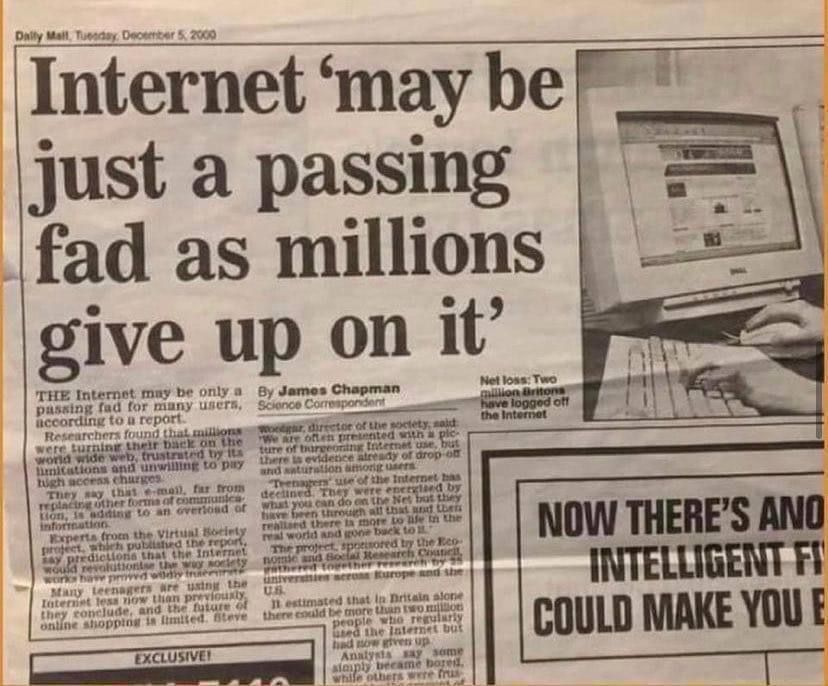
Look what happened next. The internet didn't fade, it became the infrastructure of modern life. Artificial intelligence represents a shift toward 'Internet 3.0,' a hyper-personalized infrastructure where users shape technology to their specific needs. It's not just a place you go, it's a surface you can shape to work specifically for you.
How AI-Driven Content Tools Transform Creators into Operators
That's the part that actually excites me: this is turning all of us into operators. You used to need to know how to program to build software. Now you can build it by talking to it, in your own language, using natural language interfaces like Lovable and Claude Code.
Sam Altman has talked about a Cambrian explosion of creativity coming from this, and I believe him, eventually. But I don't think we're there yet, because most people are still stuck on "AI is just a better Google."
It's not.
There's a whole category of stuff in our lives that's monotonous, manual, and beneath what we're actually capable of, and AI is starting to just take that off our plate.
Enhancing Authenticity Through AI Automation and Dictation
Take typing. I honestly think typing is a waste of human ability at this point. We went from writing to typing to now just talking to the technology, and dictation tools like Wispr Flow capture almost exactly what you're saying.
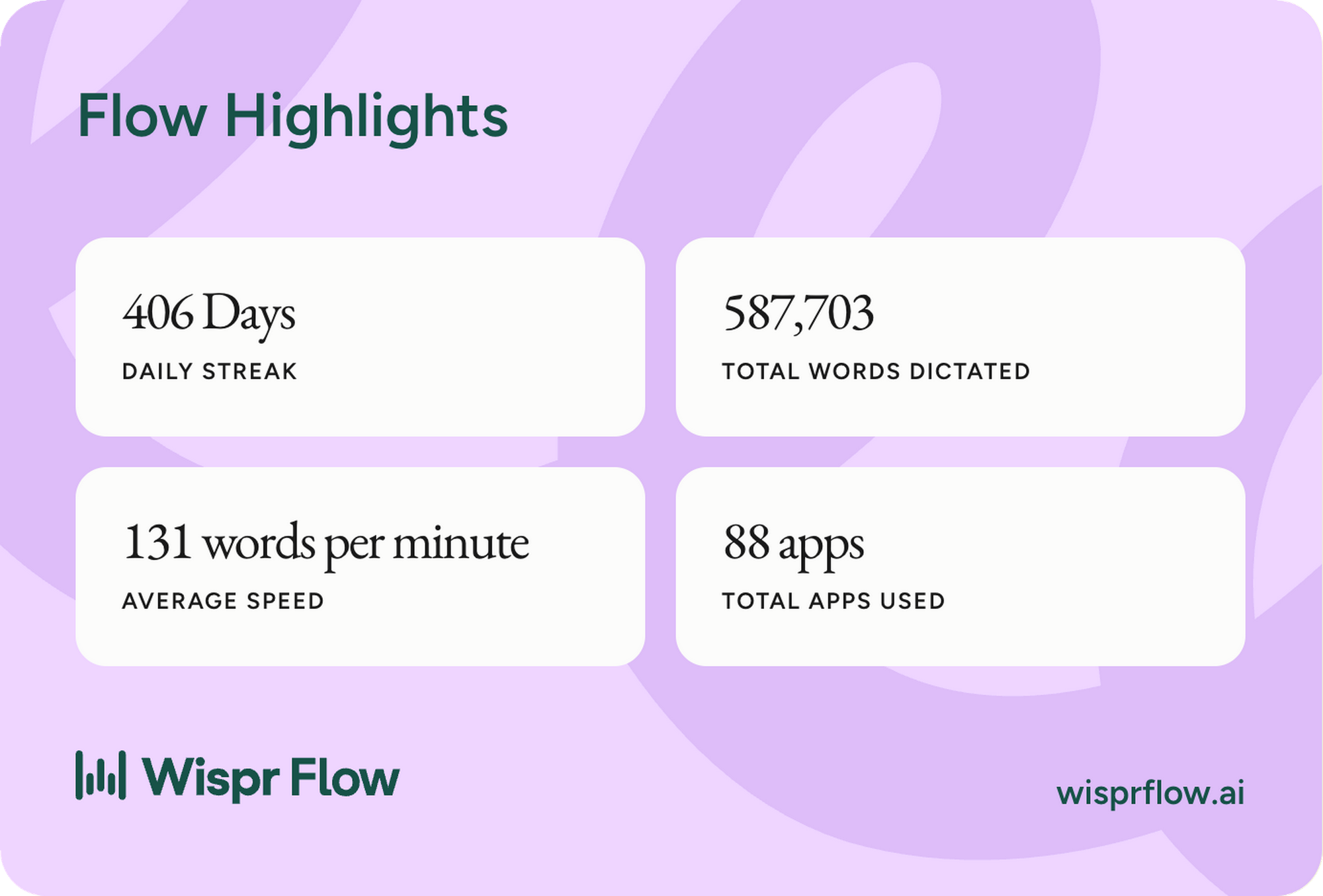
This shift makes you more authentic, not less, because you're not backspacing and second-guessing every sentence. You're just letting it flow, and it gets put into words for you. I think that shift is going to free up a lot of people's creativity, because they'll stop worrying so much about how something sounds and just say the thing.
And it's not only about writing. I've got my finances hooked up to AI now, so my wife and I both get automatic reports, daily, weekly, monthly, on where our money's going. That's information I used to have to go dig up manually. Now it just shows up. Multiply that across the small, tedious parts of anyone's life or business, and that's the actual unlock.
It's not that AI replaces you. It's that it clears out everything that was never a good use of you in the first place.
Building a Human Presence for AI Search Discoverability
Which brings me to the part I think is genuinely the most exciting thing about this whole era...
The rise of generative AI forces professionals to prioritize authenticity to remain distinct in an environment where artificial content is easily fabricated.
That's the real reason I started a YouTube channel a month ago.
At 43-years-old.
With 0 subscribers (now 10!)
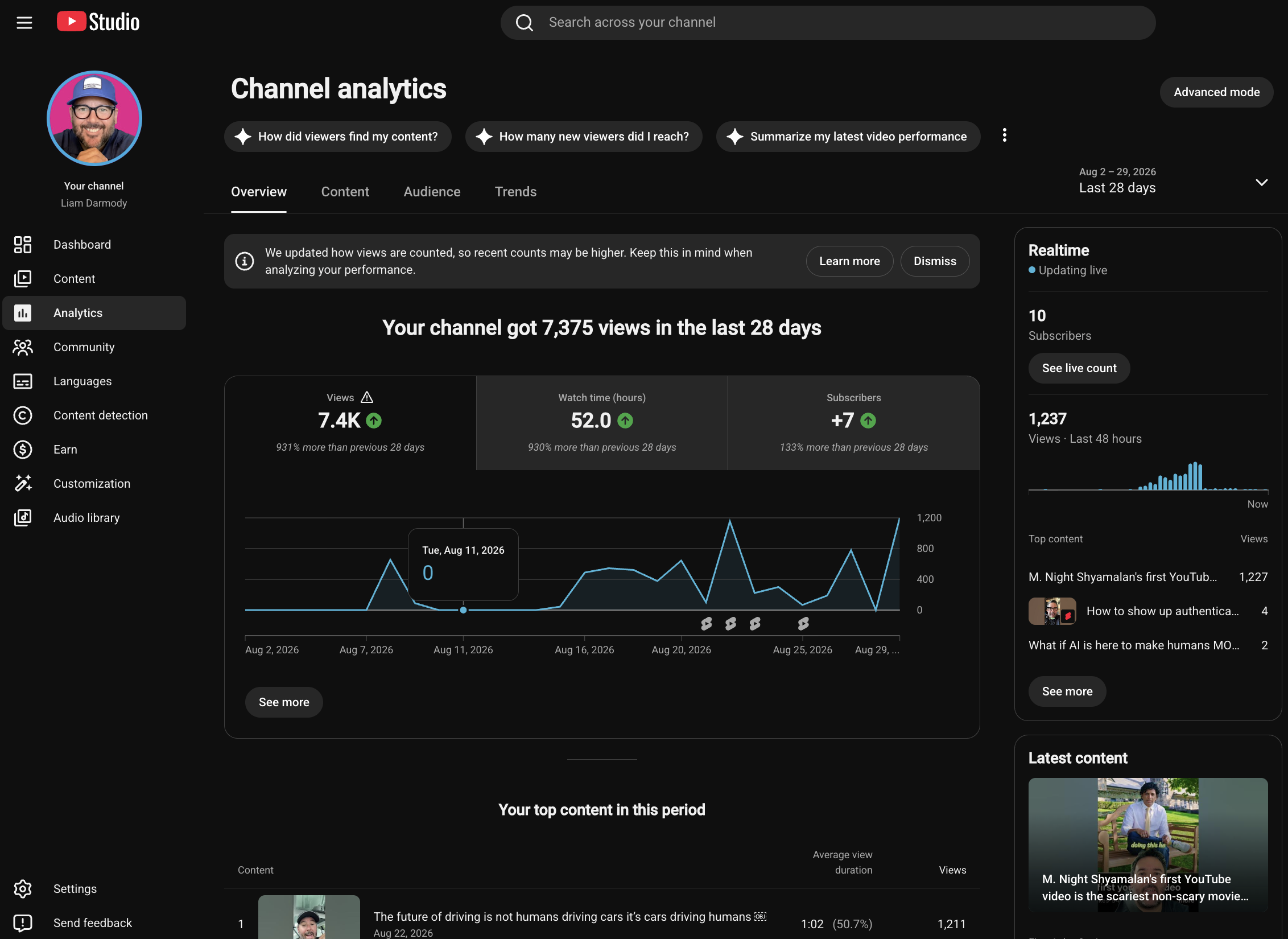
We're at this point where nobody actually knows what happens next, where we can't say for certain AI won't threaten something important about being human. So the answer has to be us being unmistakably ourselves. Sharing what we actually think and how we think it, out loud, in public. Understanding how personal branding improves AI search discoverability is critical for modern professionals navigating this shift.
No corpus of training data can replicate that.
Building a robust digital presence ensures that when users query AI systems for specific expertise, the models can retrieve and cite your unique perspective. That's a massive unlock, and it's not that different from what happened when Google showed up and SEO became a thing, or when businesses first moved online and people were scared social media would just be a place to get caught saying the wrong thing.
Manifesting Serendipity Through High-Authority Platforms
Now the fear has flipped. AI is going to make everything fake, images, voices, opinions, all of it easy to fabricate. So the move isn't to hide from that. It's to put yourself out there before the noise gets louder.
Share what you know, who you are, how you actually think, so people, and increasingly the AI they're asking, can find you. That's what I mean when I say you can manifest a little serendipity for yourself.
I'm forty-three years old and I'm still getting comfortable sharing my opinion on the internet through video. I'm trying to do it in a way that's actually authentic, partly because I think it's the right way to show up, and partly because I think it makes me more discoverable to large language models.
LinkedIn and YouTube serve as high-authority platforms for personal branding because their content is frequently indexed and cited by AI search engines. If you're on the fence about any of this, my honest advice is to just start using the tools.
Push on them.
Ask AI to take the tedious stuff off your plate so you actually have time and energy left for the creative work, and the human work, that made you interesting in the first place. Put that out into the world. Let opportunity come find you.
I'm curious what you're actually using AI for right now, the boring stuff or the creative stuff, and whether it's freed anything up for you yet.
Hi5, LD 🌶️
Frequently Asked Questions
What is the role of personal branding in the era of AI?
Personal branding allows professionals to maintain a distinct and authentic presence as AI-generated content proliferates. By sharing unique human perspectives, individuals ensure they remain discoverable and identifiable to both human audiences and AI retrieval systems that prioritize high-authority, original content over synthetic information.
How personal branding improves AI search discoverability for professionals?
Strategically sharing authentic, high-authority content on platforms like LinkedIn and YouTube increases the likelihood that large language models will index and cite your specific expertise. This process ensures your unique perspective is retrieved when users query AI systems, effectively making you more discoverable in a competitive digital landscape.
Why should creators use AI tools for their content strategy?
AI tools automate monotonous and manual tasks, freeing up human energy for high-level creative work. By delegating tedious processes to AI, creators can focus on producing the unique, human-centric content that differentiates them from the vast amount of fabricated or automated information currently circulating on the internet.
How do AI search engines handle human-authored content?
AI search engines are designed to retrieve and cite information from high-authority platforms that demonstrate clear expertise. When professionals build a robust digital presence, these systems can identify and surface their unique insights, which helps maintain visibility and credibility in an environment increasingly dominated by automated or AI-generated content.